
RV Carport Fort Worth: Custom Covers Built On Site, Sized for Your Rig
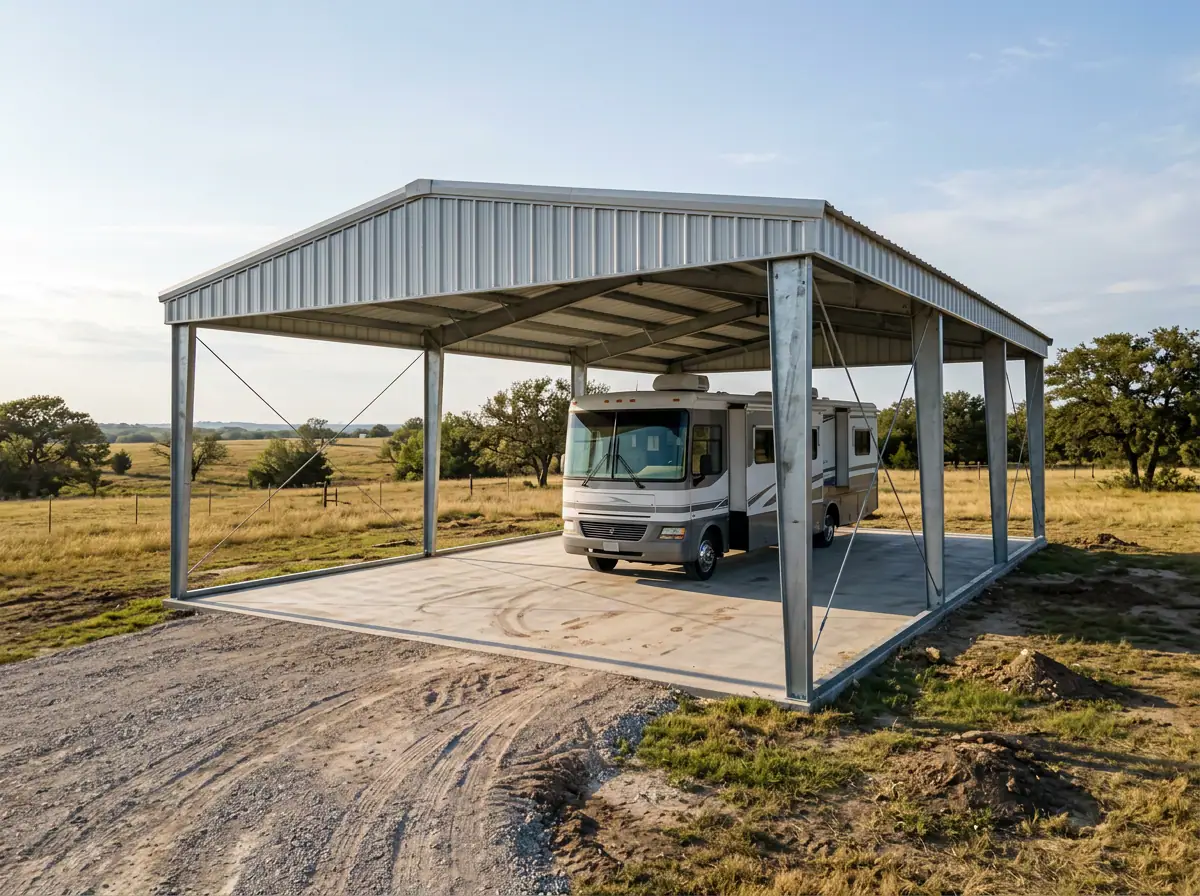
If you own a motorhome, fifth wheel, travel trailer or boat in North Texas, you already know what the sun, wind and hail do to an unprotected rig. Roofs fade, seals crack, and one spring storm can turn a big purchase into a repair bill. A properly built RV carport in Fort Worth protects your investment, but only if it is sized right, anchored right and built to handle our weather.
This guide walks through how to size an RV cover, which roof style makes sense, when to enclose it, what the foundation needs, and what actually drives the price. It also explains why a builder who handles the slab and the steel under one contract is a different experience from ordering a national kit and chasing down your own installer.
Who This RV Carport Guide Is For
Galvan Metal Building Services (Galvan MBS) builds custom carports and RV covers for owners across Tarrant County and the surrounding towns. That includes Fort Worth, Weatherford, Aledo, Azle, Burleson, Granbury and Springtown, plus other communities within roughly 80 miles of Fort Worth. This page is written for:
- Class A motorhome and Class C owners who need real height and length, not a standard car-sized carport.
- Fifth wheel and travel trailer owners who want a cover that clears the nose, the AC units and the hitch area.
- Camper and toy hauler owners who are tired of tarps and parking in the street.
- Boat owners who want a boat cover tall enough for a trailer, a tower or a bimini top.
Whether you search for an RV camper carport, a motorhome carport or simply carports for RVs, the same planning questions apply. The answers just change with your rig and your property.
How to Size an RV Cover: Length, Width, Height and Clearance
Sizing is where most RV covers go wrong. A cover that is "close enough" on paper can leave you unable to open a slide-out, clear a roof AC unit or back in without scraping a leg. Use your actual numbers, not the brochure numbers.
A short measuring checklist
- Overall length: bumper to bumper, including the hitch, ladder, bike rack and spare tire. For a trailer, measure the full length with the tongue.
- Overall width: at the widest point, with slide-outs and awnings in their extended positions if you plan to open them under cover.
- Overall height: to the top of the tallest item on the roof, usually the AC unit, satellite dish or antenna. Check your spec sheet, then confirm with a tape measure.
- Door and entry clearance: how far the entry door, storage bays and slide-outs swing or extend.
- Turning room: the approach path, gate width and ground slope leading to the pad.
Leg height and width by rig type
A Class A motorhome and a tall fifth wheel typically need a much taller leg than a pop-up or a small travel trailer. The usual rule is to take your tallest roof point and add generous clearance so you are not threading the needle every time you pull in. Width follows the same logic: leave room to walk around the rig and open doors and compartments. Exact leg heights and widths depend on the design, so Galvan MBS confirms them against your measurements during the quote rather than guessing from a catalog size.
Boats are similar. Measure the boat on its trailer, not the boat alone, and include any tower, radar arch or windshield.
Roof Styles Compared: Regular, A-Frame Boxed Eave and Vertical Roof
The roof style affects looks, how water and hail are handled, and how the structure performs in wind.
- Regular roof: rounded-edge panels running across the roof. It is the most economical style and works well for many covers. It is common on budget-minded builds.
- A-frame boxed eave: the panels run down the slope with a finished, boxed look at the eaves. It looks closer to a traditional building and is often chosen when appearance matters, such as near the house.
- Vertical roof: the roof panels run vertically from peak to eave, so rain, debris and hail-melt shed down the slope instead of sitting in horizontal ribs. That is why it is commonly chosen where heavy rain and hail are a concern, which describes plenty of North Texas.
If hail is your main worry, a vertical roof paired with sturdy framing is a sensible direction. Steel framing is commonly offered in 14-gauge and 12-gauge, and 12-gauge is the heavier option. Ask any builder, including us, exactly which gauge is in your quote and where it is used, so you can compare bids fairly.
Open, Partially Enclosed or Fully Enclosed
You do not have to choose between a bare roof and a full garage. There is a middle ground.
- Open cover: roof and legs only. Best airflow, easiest access, lowest cost. It stops sun and most direct hail, but wind-driven rain can still reach the rig.
- Partially enclosed: side panels, gable ends or a lean-to added to one side. A lean-to can also double as storage for boat gear, generators or a utility trailer. Closing the windward side makes a real difference during Texas storms.
- Fully enclosed RV garage: walls on all sides with an oversized door. This protects against weather, dust, theft and prying eyes, and it can keep the interior cooler. Step up to an enclosed RV garage if you store a high-value rig for long periods, want to work on it out of the weather, or live where security is a concern.
You can browse the options on our garages and RV covers page. If you want space for tools and a bench alongside the rig, a combination building from our workshops and storage buildings may make more sense than a cover alone.
Foundation and Anchoring: Concrete Slab or Dirt and Gravel
A cover is only as good as what it is anchored to. There are two common approaches:
- Anchors on dirt or gravel: lower upfront cost and quicker to start. It can work for open covers, but the ground needs to be reasonably level and firm, and the surface under the rig stays unfinished.
- Concrete slab: a poured pad gives a clean, level, durable surface and a solid anchor point for the steel. It is the better choice for heavy motorhomes, enclosed RV garages and any structure where you want a finished floor.
Whether you add a concrete slab depends on your rig weight, your soil, your budget and how you plan to use the space. The key point is who does the work. Galvan MBS engineers and pours concrete in-house and welds and anchors the steel on site, so the slab and the frame are planned together. That avoids the classic gap where the slab contractor is booked for next month and your steel sits waiting, or the slab is poured a few inches off from what the frame needs.
Built On Site vs. a National Kit
National kit sellers are fine for some buyers. You pick a size online, the parts arrive on a truck, and the rest is up to you. In practice that usually means:
- You find and schedule your own installer.
- You find and schedule a separate slab or concrete contractor.
- You are responsible for checking that the foundation matches the kit.
- If something does not fit or is installed wrong, the kit seller, the installer and the slab contractor can each point at someone else.
With a local builder, one contract covers sizing, foundation, steel, installation and cleanup. Lorenzo Galvan is the owner, foreman and main point of contact, so the person who looks at your site is the person who answers when you have a question later. There are no layers of sales reps between you and the crew. For standard carports, once materials are on site, erection is often a matter of one to two days. A larger RV cover with a slab involves more steps and takes longer.
Our turnkey finishing services also let you go further later, such as adding a slab, electrical for a power pedestal or a finished enclosure, without starting over with new contractors.
What Drives the Price of an RV Carport
We do not publish fixed prices for RV covers because no two sites and no two rigs are the same. These are the factors that move the number:
- Size: length and width, which set how much steel and roofing is needed.
- Height: taller legs for Class A motorhomes and tall fifth wheels use more material and need stronger bracing.
- Steel gauge: 14-gauge versus 12-gauge framing affects material cost and strength.
- Roof style: regular, boxed eave or vertical roof.
- Enclosure: open, side panels, gable ends, lean-to or fully enclosed with a door.
- Foundation: anchors on dirt or gravel versus a poured concrete slab, plus any site prep or grading.
A bare structure costs less than a finished one. Giving us your rig measurements and location up front is the fastest way to a real figure instead of a ballpark.
Permits, HOA Rules and Setbacks
Before you build anything, check with your city or county and your HOA, if you have one. Rules on height, placement, setbacks from property lines and visible RV storage vary by location, and a Fort Worth lot can be very different from a rural parcel near Aledo or Granbury. Do this early so the design fits the rules from the start.
When you request a quote, tell us what you have learned. We can help you think through placement, access and layout so the plan is realistic, and we will talk through what your site is likely to need. We will not make code claims for your specific address, so confirm requirements with the proper authority.
RV Carport Fort Worth FAQ
How long does it take to build an RV cover?
It depends on size, whether you need a slab, permit timing and material availability. Standard carports can often be erected in one to two days once materials are on site. Larger RV covers and enclosed RV garages with a concrete slab take longer because of site prep, pouring and curing. We give you a schedule with your quote.
How do I size an RV cover for slide-outs?
Measure the rig with the slide-outs extended if you want to open them under cover, then add working room on each side. If you only open slide-outs outside, size to the closed width. Tell us which you prefer and we will account for it.
Should I add a concrete slab?
A slab is worth considering for heavy rigs, enclosed RV garages and any site with uneven or soft ground. Open covers on firm, level ground can sometimes use anchors instead. We will recommend what suits your rig and soil.
What areas do you serve?
Galvan MBS serves Fort Worth, Tarrant County, Weatherford, Aledo, Azle, Burleson, Granbury, Springtown and other North Texas communities within roughly 80 miles of Fort Worth.
Get Your Rig Covered the Right Way
A good RV cover starts with the right measurements and a builder who will stand behind the whole job. See real examples in our project gallery, then send your rig's length and height and your property location through Start a Quote. You can also contact us or call or text 682-560-3469 to set up an on-site measurement.